Filters
Question type

The graph of the following curve is given.Find the area that it encloses. The graph of the following curve is given.Find the area that it encloses.     A)    B)    C)    D)    E)  A =  The graph of the following curve is given.Find the area that it encloses.     A)    B)    C)    D)    E)  A =


A) The graph of the following curve is given.Find the area that it encloses.     A)    B)    C)    D)    E)  A =
B) The graph of the following curve is given.Find the area that it encloses.     A)    B)    C)    D)    E)  A =
C) The graph of the following curve is given.Find the area that it encloses.     A)    B)    C)    D)    E)  A =
D) The graph of the following curve is given.Find the area that it encloses.     A)    B)    C)    D)    E)  A =
E) A = The graph of the following curve is given.Find the area that it encloses.     A)    B)    C)    D)    E)  A =

F) A) and D)
G) A) and E)

Correct Answer

verifed

verified

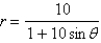
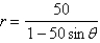
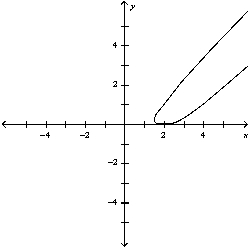
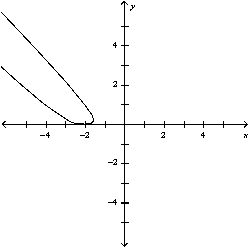
Write a polar equation in r and Write a polar equation in r and   of a hyperbola with the focus at the origin,with the eccentricity   and directrix   . A)    B)    C)    D)    E)   of a hyperbola with the focus at the origin,with the eccentricity Write a polar equation in r and   of a hyperbola with the focus at the origin,with the eccentricity   and directrix   . A)    B)    C)    D)    E)   and directrix Write a polar equation in r and   of a hyperbola with the focus at the origin,with the eccentricity   and directrix   . A)    B)    C)    D)    E)   .


A) Write a polar equation in r and   of a hyperbola with the focus at the origin,with the eccentricity   and directrix   . A)    B)    C)    D)    E)
B) Write a polar equation in r and   of a hyperbola with the focus at the origin,with the eccentricity   and directrix   . A)    B)    C)    D)    E)
C) Write a polar equation in r and   of a hyperbola with the focus at the origin,with the eccentricity   and directrix   . A)    B)    C)    D)    E)
D) Write a polar equation in r and   of a hyperbola with the focus at the origin,with the eccentricity   and directrix   . A)    B)    C)    D)    E)
E) Write a polar equation in r and   of a hyperbola with the focus at the origin,with the eccentricity   and directrix   . A)    B)    C)    D)    E)

F) A) and E)
G) A) and C)

Correct Answer

verifed

verified

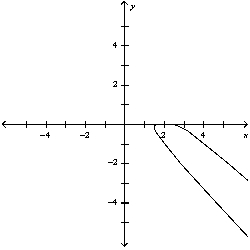
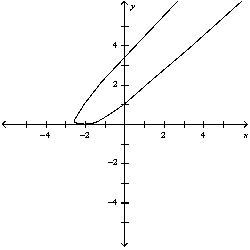
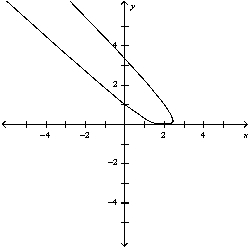
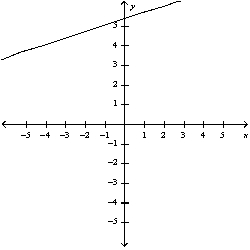
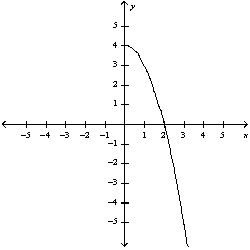
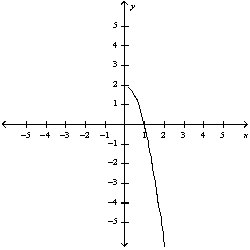
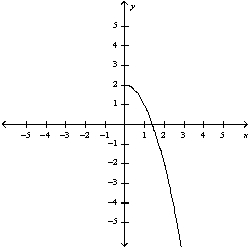
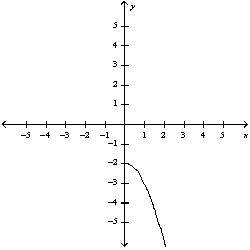
Match the parametric equations with the graphs labeled a-e. Match the parametric equations with the graphs labeled a-e.   A)    B)    C)    D)    E)


A) Match the parametric equations with the graphs labeled a-e.   A)    B)    C)    D)    E)
B) Match the parametric equations with the graphs labeled a-e.   A)    B)    C)    D)    E)
C) Match the parametric equations with the graphs labeled a-e.   A)    B)    C)    D)    E)
D) Match the parametric equations with the graphs labeled a-e.   A)    B)    C)    D)    E)
E) Match the parametric equations with the graphs labeled a-e.   A)    B)    C)    D)    E)

F) A) and B)
G) C) and E)

Correct Answer

verifed

verified

The orbit of Hale-Bopp comet,discovered in 1995,is an ellipse with eccentricity 0.995 and one focus at the Sun.The length of its major axis is 369.9 AU.[An astronomical unit (AU) is the mean distance between Earth and the Sun,about 93 million miles.] Find the maximum distance from the comet to the Sun.(The perihelion distance from a planet to the Sun is a(1-e) and the aphelion distance is a(1+e) .Find the answer in AU and round to the nearest hundredth.


A) The orbit of Hale-Bopp comet,discovered in 1995,is an ellipse with eccentricity 0.995 and one focus at the Sun.The length of its major axis is 369.9 AU.[An astronomical unit (AU) is the mean distance between Earth and the Sun,about 93 million miles.] Find the maximum distance from the comet to the Sun.(The perihelion distance from a planet to the Sun is a(1-e)  and the aphelion distance is a(1+e)  .Find the answer in AU and round to the nearest hundredth. A)    AU B)    AU C)    AU D)    AU E)    AU AU
B) The orbit of Hale-Bopp comet,discovered in 1995,is an ellipse with eccentricity 0.995 and one focus at the Sun.The length of its major axis is 369.9 AU.[An astronomical unit (AU) is the mean distance between Earth and the Sun,about 93 million miles.] Find the maximum distance from the comet to the Sun.(The perihelion distance from a planet to the Sun is a(1-e)  and the aphelion distance is a(1+e)  .Find the answer in AU and round to the nearest hundredth. A)    AU B)    AU C)    AU D)    AU E)    AU AU
C) The orbit of Hale-Bopp comet,discovered in 1995,is an ellipse with eccentricity 0.995 and one focus at the Sun.The length of its major axis is 369.9 AU.[An astronomical unit (AU) is the mean distance between Earth and the Sun,about 93 million miles.] Find the maximum distance from the comet to the Sun.(The perihelion distance from a planet to the Sun is a(1-e)  and the aphelion distance is a(1+e)  .Find the answer in AU and round to the nearest hundredth. A)    AU B)    AU C)    AU D)    AU E)    AU AU
D) The orbit of Hale-Bopp comet,discovered in 1995,is an ellipse with eccentricity 0.995 and one focus at the Sun.The length of its major axis is 369.9 AU.[An astronomical unit (AU) is the mean distance between Earth and the Sun,about 93 million miles.] Find the maximum distance from the comet to the Sun.(The perihelion distance from a planet to the Sun is a(1-e)  and the aphelion distance is a(1+e)  .Find the answer in AU and round to the nearest hundredth. A)    AU B)    AU C)    AU D)    AU E)    AU AU
E) The orbit of Hale-Bopp comet,discovered in 1995,is an ellipse with eccentricity 0.995 and one focus at the Sun.The length of its major axis is 369.9 AU.[An astronomical unit (AU) is the mean distance between Earth and the Sun,about 93 million miles.] Find the maximum distance from the comet to the Sun.(The perihelion distance from a planet to the Sun is a(1-e)  and the aphelion distance is a(1+e)  .Find the answer in AU and round to the nearest hundredth. A)    AU B)    AU C)    AU D)    AU E)    AU AU

F) A) and B)
G) All of the above

Correct Answer

verifed

verified

A

Find the area of the region enclosed by one loop of the curve. Find the area of the region enclosed by one loop of the curve.   A)    B)    C)    D)    E)


A) Find the area of the region enclosed by one loop of the curve.   A)    B)    C)    D)    E)
B) Find the area of the region enclosed by one loop of the curve.   A)    B)    C)    D)    E)
C) Find the area of the region enclosed by one loop of the curve.   A)    B)    C)    D)    E)
D) Find the area of the region enclosed by one loop of the curve.   A)    B)    C)    D)    E)
E) Find the area of the region enclosed by one loop of the curve.   A)    B)    C)    D)    E)

F) C) and D)
G) D) and E)

Correct Answer

verifed

verified

Write a polar equation in r and θ \theta of an ellipse with the focus at the origin,with the eccentricity  Write a polar equation in r and   \theta  of an ellipse with the focus at the origin,with the eccentricity   and directrix   . A)    B)    C)    D)    E)    and directrix  Write a polar equation in r and   \theta  of an ellipse with the focus at the origin,with the eccentricity   and directrix   . A)    B)    C)    D)    E)    .


A)  Write a polar equation in r and   \theta  of an ellipse with the focus at the origin,with the eccentricity   and directrix   . A)    B)    C)    D)    E)
B)  Write a polar equation in r and   \theta  of an ellipse with the focus at the origin,with the eccentricity   and directrix   . A)    B)    C)    D)    E)
C)  Write a polar equation in r and   \theta  of an ellipse with the focus at the origin,with the eccentricity   and directrix   . A)    B)    C)    D)    E)
D)  Write a polar equation in r and   \theta  of an ellipse with the focus at the origin,with the eccentricity   and directrix   . A)    B)    C)    D)    E)
E)  Write a polar equation in r and   \theta  of an ellipse with the focus at the origin,with the eccentricity   and directrix   . A)    B)    C)    D)    E)

F) B) and E)
G) A) and B)

Correct Answer

verifed

verified

Find the Cartesian coordinates of the point Find the Cartesian coordinates of the point   . A)    B)    C)    D)    E)   .


A) Find the Cartesian coordinates of the point   . A)    B)    C)    D)    E)
B) Find the Cartesian coordinates of the point   . A)    B)    C)    D)    E)
C) Find the Cartesian coordinates of the point   . A)    B)    C)    D)    E)
D) Find the Cartesian coordinates of the point   . A)    B)    C)    D)    E)
E) Find the Cartesian coordinates of the point   . A)    B)    C)    D)    E)

F) A) and B)
G) A) and C)

Correct Answer

verifed

verified

Set up an integral that represents the length of the curve.Then use your calculator to find the length correct to four decimal places. Set up an integral that represents the length of the curve.Then use your calculator to find the length correct to four decimal places.

Correct Answer

verifed

verified

Write a polar equation in r and θ \theta of an ellipse with the focus at the origin,with the eccentricity  Write a polar equation in r and   \theta   of an ellipse with the focus at the origin,with the eccentricity   and vertex at   . A)    B)    C)    D)    E)    and vertex at  Write a polar equation in r and   \theta   of an ellipse with the focus at the origin,with the eccentricity   and vertex at   . A)    B)    C)    D)    E)    .


A)  Write a polar equation in r and   \theta   of an ellipse with the focus at the origin,with the eccentricity   and vertex at   . A)    B)    C)    D)    E)
B)  Write a polar equation in r and   \theta   of an ellipse with the focus at the origin,with the eccentricity   and vertex at   . A)    B)    C)    D)    E)
C)  Write a polar equation in r and   \theta   of an ellipse with the focus at the origin,with the eccentricity   and vertex at   . A)    B)    C)    D)    E)
D)  Write a polar equation in r and   \theta   of an ellipse with the focus at the origin,with the eccentricity   and vertex at   . A)    B)    C)    D)    E)
E)  Write a polar equation in r and   \theta   of an ellipse with the focus at the origin,with the eccentricity   and vertex at   . A)    B)    C)    D)    E)

F) A) and D)
G) C) and D)

Correct Answer

verifed

verified

Consider the polar equation Consider the polar equation   . (a)Find the eccentricity and an equation of the directrix of the conic. (b)Identify the conic. (c)Sketch the curve. . (a)Find the eccentricity and an equation of the directrix of the conic. (b)Identify the conic. (c)Sketch the curve.

Correct Answer

verifed

verified

(a)eccentricity: 2 ,...

View Answer

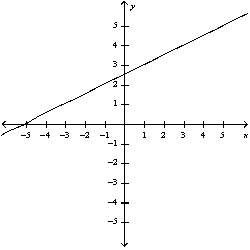
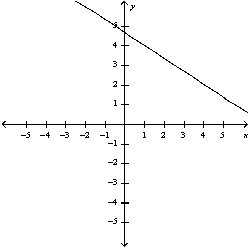
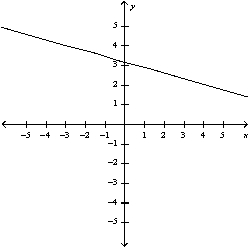
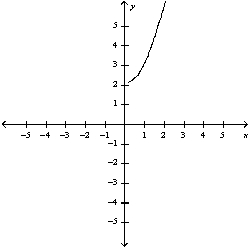
Select the curve by using the parametric equations to plot the points. Select the curve by using the parametric equations to plot the points.   A)    B)    C)    D)    E)


A) Select the curve by using the parametric equations to plot the points.   A)    B)    C)    D)    E)
B) Select the curve by using the parametric equations to plot the points.   A)    B)    C)    D)    E)
C) Select the curve by using the parametric equations to plot the points.   A)    B)    C)    D)    E)
D) Select the curve by using the parametric equations to plot the points.   A)    B)    C)    D)    E)
E) Select the curve by using the parametric equations to plot the points.   A)    B)    C)    D)    E)

F) A) and B)
G) A) and C)

Correct Answer

verifed

verified

Consider the polar equation Consider the polar equation   . (a)Find the eccentricity and an equation of the directrix of the conic. (b)Identify the conic. (c)Sketch the curve. . (a)Find the eccentricity and an equation of the directrix of the conic. (b)Identify the conic. (c)Sketch the curve.

Correct Answer

verifed

verified

(a)eccentricity: 1 ,...

View Answer

Find the length of the curve. Find the length of the curve.   ,   ,   A)    B)    C)    D)    E)  None of these , Find the length of the curve.   ,   ,   A)    B)    C)    D)    E)  None of these , Find the length of the curve.   ,   ,   A)    B)    C)    D)    E)  None of these


A) Find the length of the curve.   ,   ,   A)    B)    C)    D)    E)  None of these
B) Find the length of the curve.   ,   ,   A)    B)    C)    D)    E)  None of these
C) Find the length of the curve.   ,   ,   A)    B)    C)    D)    E)  None of these
D) Find the length of the curve.   ,   ,   A)    B)    C)    D)    E)  None of these
E) None of these

F) B) and E)
G) D) and E)

Correct Answer

verifed

verified

Find the eccentricity of the conic. Find the eccentricity of the conic.   A)    B)    C)    D)    E)


A) Find the eccentricity of the conic.   A)    B)    C)    D)    E)
B) Find the eccentricity of the conic.   A)    B)    C)    D)    E)
C) Find the eccentricity of the conic.   A)    B)    C)    D)    E)
D) Find the eccentricity of the conic.   A)    B)    C)    D)    E)
E) Find the eccentricity of the conic.   A)    B)    C)    D)    E)

F) B) and D)
G) A) and E)

Correct Answer

verifed

verified

C

Find the area that the curve encloses. Find the area that the curve encloses.    Find the area that the curve encloses.

Correct Answer

verifed

verified

Select the curve by using the parametric equations to plot the points. Select the curve by using the parametric equations to plot the points.   A)    B)    C)    D)    E)


A) Select the curve by using the parametric equations to plot the points.   A)    B)    C)    D)    E)
B) Select the curve by using the parametric equations to plot the points.   A)    B)    C)    D)    E)
C) Select the curve by using the parametric equations to plot the points.   A)    B)    C)    D)    E)
D) Select the curve by using the parametric equations to plot the points.   A)    B)    C)    D)    E)
E) Select the curve by using the parametric equations to plot the points.   A)    B)    C)    D)    E)

F) B) and D)
G) All of the above

Correct Answer

verifed

verified

D

Set up,but do not evaluate,an integral that represents the length of the parametric curve. Set up,but do not evaluate,an integral that represents the length of the parametric curve.

Correct Answer

verifed

verified

Find the area of the region that lies inside the first curve and outside the second curve. Find the area of the region that lies inside the first curve and outside the second curve.   A)    B)    C)    D)    E)


A) Find the area of the region that lies inside the first curve and outside the second curve.   A)    B)    C)    D)    E)
B) Find the area of the region that lies inside the first curve and outside the second curve.   A)    B)    C)    D)    E)
C) Find the area of the region that lies inside the first curve and outside the second curve.   A)    B)    C)    D)    E)
D) Find the area of the region that lies inside the first curve and outside the second curve.   A)    B)    C)    D)    E)
E) Find the area of the region that lies inside the first curve and outside the second curve.   A)    B)    C)    D)    E)

F) C) and E)
G) B) and D)

Correct Answer

verifed

verified

The planet Mercury travels in an elliptical orbit with eccentricity 0.403 .Its minimum distance from the Sun is The planet Mercury travels in an elliptical orbit with eccentricity 0.403 .Its minimum distance from the Sun is   km.If the perihelion distance from a planet to the Sun is a (1- e)  and the aphelion distance is a (1+e)  ,find the maximum distance (in km) from Mercury to the Sun. A)    km B)    km C)    km D)    km E)    km km.If the perihelion distance from a planet to the Sun is a (1- e) and the aphelion distance is a (1+e) ,find the maximum distance (in km) from Mercury to the Sun.


A) The planet Mercury travels in an elliptical orbit with eccentricity 0.403 .Its minimum distance from the Sun is   km.If the perihelion distance from a planet to the Sun is a (1- e)  and the aphelion distance is a (1+e)  ,find the maximum distance (in km) from Mercury to the Sun. A)    km B)    km C)    km D)    km E)    km km
B) The planet Mercury travels in an elliptical orbit with eccentricity 0.403 .Its minimum distance from the Sun is   km.If the perihelion distance from a planet to the Sun is a (1- e)  and the aphelion distance is a (1+e)  ,find the maximum distance (in km) from Mercury to the Sun. A)    km B)    km C)    km D)    km E)    km km
C) The planet Mercury travels in an elliptical orbit with eccentricity 0.403 .Its minimum distance from the Sun is   km.If the perihelion distance from a planet to the Sun is a (1- e)  and the aphelion distance is a (1+e)  ,find the maximum distance (in km) from Mercury to the Sun. A)    km B)    km C)    km D)    km E)    km km
D) The planet Mercury travels in an elliptical orbit with eccentricity 0.403 .Its minimum distance from the Sun is   km.If the perihelion distance from a planet to the Sun is a (1- e)  and the aphelion distance is a (1+e)  ,find the maximum distance (in km) from Mercury to the Sun. A)    km B)    km C)    km D)    km E)    km km
E) The planet Mercury travels in an elliptical orbit with eccentricity 0.403 .Its minimum distance from the Sun is   km.If the perihelion distance from a planet to the Sun is a (1- e)  and the aphelion distance is a (1+e)  ,find the maximum distance (in km) from Mercury to the Sun. A)    km B)    km C)    km D)    km E)    km km

F) B) and E)
G) B) and C)

Correct Answer

verifed

verified

Find a polar equation for the curve represented by the given Cartesian equation. Find a polar equation for the curve represented by the given Cartesian equation.   A)    B)    C)    D)    E)


A) Find a polar equation for the curve represented by the given Cartesian equation.   A)    B)    C)    D)    E)
B) Find a polar equation for the curve represented by the given Cartesian equation.   A)    B)    C)    D)    E)
C) Find a polar equation for the curve represented by the given Cartesian equation.   A)    B)    C)    D)    E)
D) Find a polar equation for the curve represented by the given Cartesian equation.   A)    B)    C)    D)    E)
E) Find a polar equation for the curve represented by the given Cartesian equation.   A)    B)    C)    D)    E)

F) B) and E)
G) All of the above

Correct Answer

verifed

verified

Showing 1 - 20 of 30

Related Exams

Show Answer